
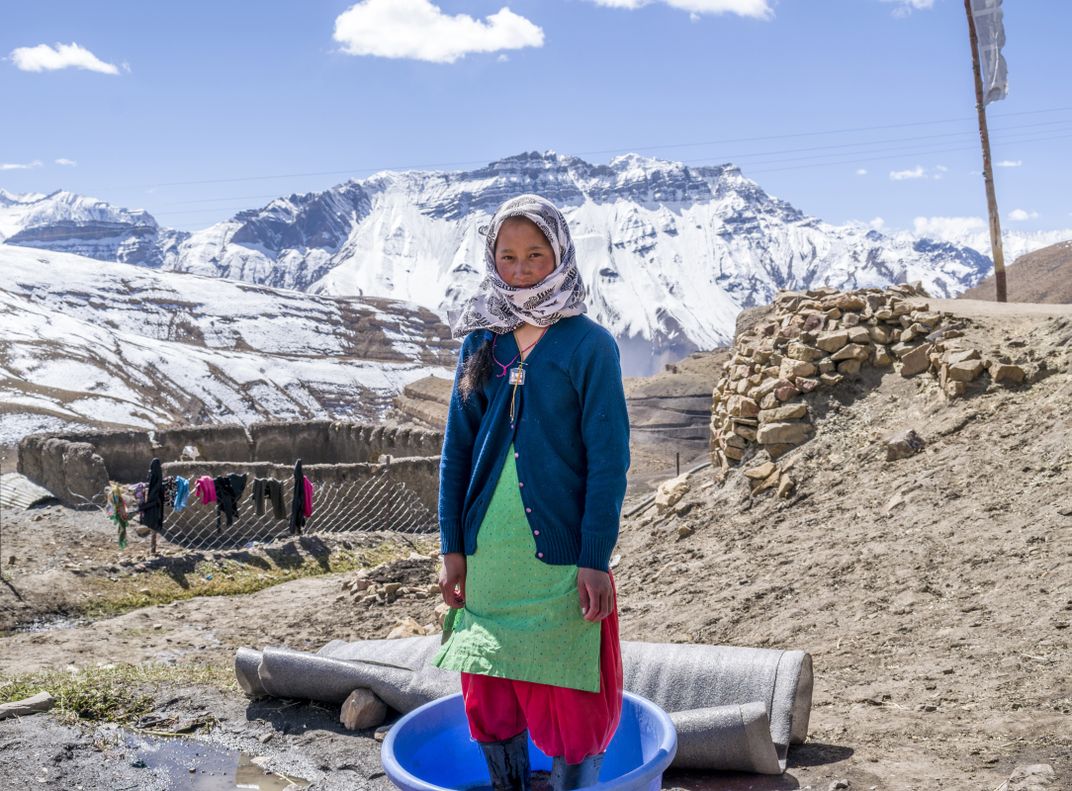
Women in the Himalayas play a major role in the preservation of indigenous culture & knowledge, owing to their restrictive interaction with the outside world. The indigenous knowledge system revolves around the traditional values including food, clothing, housing, medicine, energy; the socio-cultural values including ritual, spiritual, aesthetic, educational, & psychological values; the economic value-structure that includes agriculture, tourism, pharmaceutical & industrial knowledge & traditional practices of resource use like medicinal plants, forests & grasslands, wild edible plants etc. The knowledge is passed on from one generation to another, in which the women play an important role in terms of their responsibilities of resource management, particularly in the production system. This responsibility of food production has endured women to rationally use, conserve and promote the scarce resources of the region. As an example one can look at the Chipko movement in Uttarakhand, initiated by the women in 1973. The Chipko movement was undertaken to preserve the forest cover in the Uttarakhand (then Uttar Pradesh), since it was the women who were most affected by the continuous felling of trees in the region. It resulted in a 15-year ban on the felling of trees in the forest areas of the Himalayas.
| Date Taken: | 10.2018 |
| Date Uploaded: | 11.2019 |
| Photo Location: | Kaza, India |
| Camera: | NIKON D5300 |
| Copyright: | © Apostolos Kaloudis |