
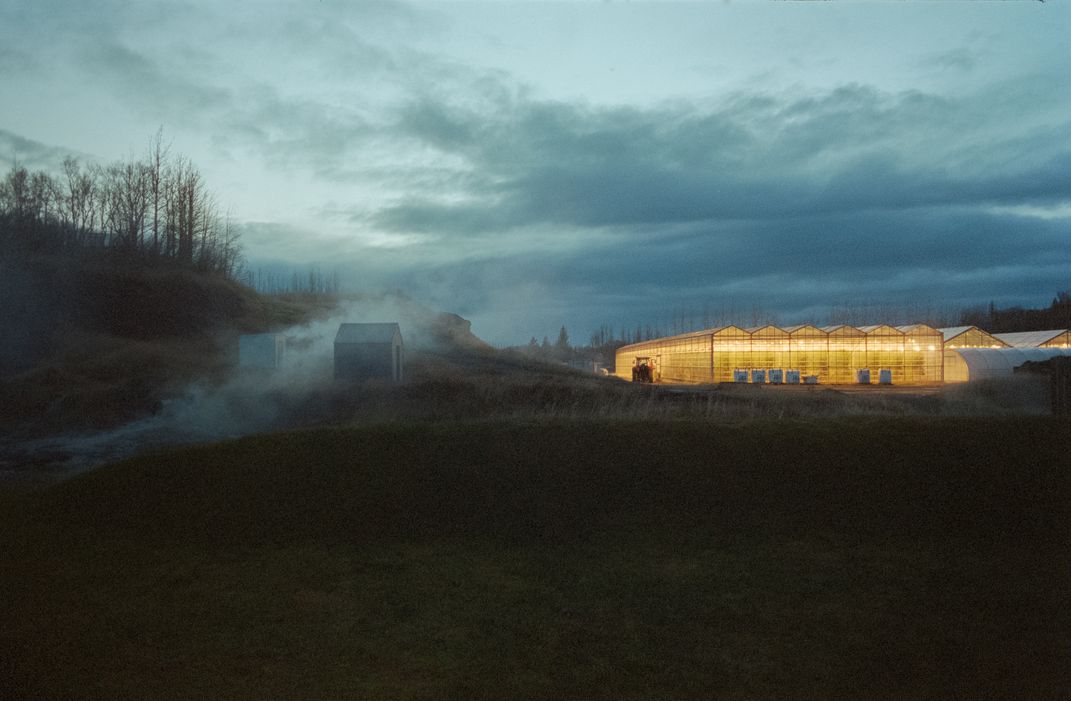
The greenhouse system in Iceland represents an extraordinary example of how modern technology can be utilized to harness natural resources in a challenging environment. Due to its geographical location within the Arctic Circle, Iceland is known for its cold and unpredictable climate, with short summers and long, harsh winters. However, the island is also rich in geothermal resources, which has enabled the development of an innovative geothermally heated cultivation system. These greenhouses are powered by geothermal springs, harnessing energy from the natural heat beneath the Icelandic ground. This system allows growers to create a controlled environment with optimal and consistent temperatures for plant growth, regardless of external weather conditions. This way, a wide range of agricultural products can be cultivated year-round, from tomatoes to strawberries. Iceland's geothermal greenhouses have allowed the country to become more self-sufficient in terms of food, reducing its reliance on agricultural imports. This technology has also created economic opportunities for the island, generating jobs and promoting sustainable agriculture. Furthermore, Iceland's greenhouse system serves as an example of how research and development are crucial for adapting to climate change and efficiently utilizing local resources in an environmentally sustainable manner. The combination of technological innovation and geothermal resources has transformed Icelandic agriculture, demonstrating that it is possible to grow high-quality produce in seemingly improbable places like Iceland and providing an interesting model for sustainable agriculture worldwide.
| Date Taken: | 11.2022 |
| Date Uploaded: | 10.2023 |
| Photo Location: | Iceland |
| Camera: | LS-9000 |
| Copyright: | © Benedetta Ristori |