
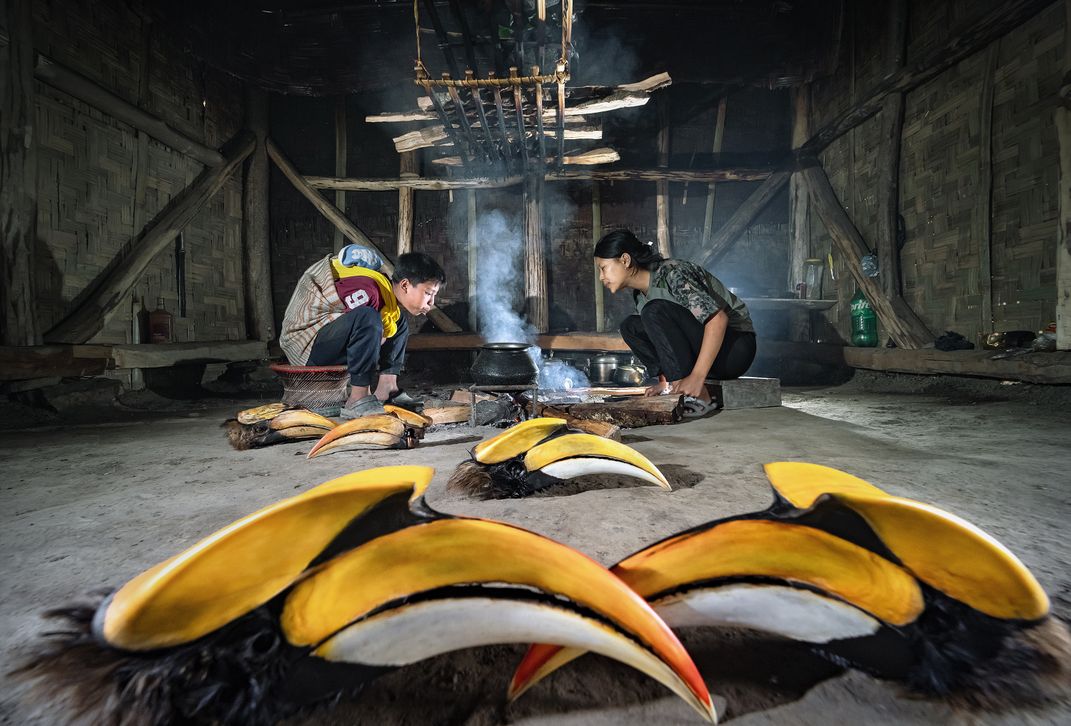
Hornbill hunting has historically been practiced by several indigenous tribes in Northeast India, notably by the Konyak tribe. The Konyak people are one of the major Naga tribes living in the Mon district of Nagaland, India, and across the border in Myanmar. For the Konyak tribe, the Great Indian Hornbill (Buceros bicornis) holds cultural and ritual significance. Traditionally, hunting the hornbill was considered a rite of passage for young men, symbolizing bravery and skill. The bird's feathers and beak were highly valued for ceremonial purposes, including headdresses and decorations used in dances and festivals. However, due to conservation efforts and changing attitudes, hornbill hunting has significantly declined among the Konyak and other tribes. Conservation initiatives, along with increased awareness about the importance of biodiversity, have led to the adoption of alternative cultural practices that do not harm endangered species like the Great Indian Hornbill. Today, while the Konyak tribe continues to celebrate their cultural heritage through various festivals and rituals, the practice of hornbill hunting has largely become a thing of the past, replaced by efforts to protect and conserve their natural environment and the species that inhabit it.
| Date Taken: | 05.2024 |
| Date Uploaded: | 11.2024 |
| Photo Location: | Mon, India |
| Camera: | ILCE-7M3 |
| Copyright: | © SUJAN SARKAR |