
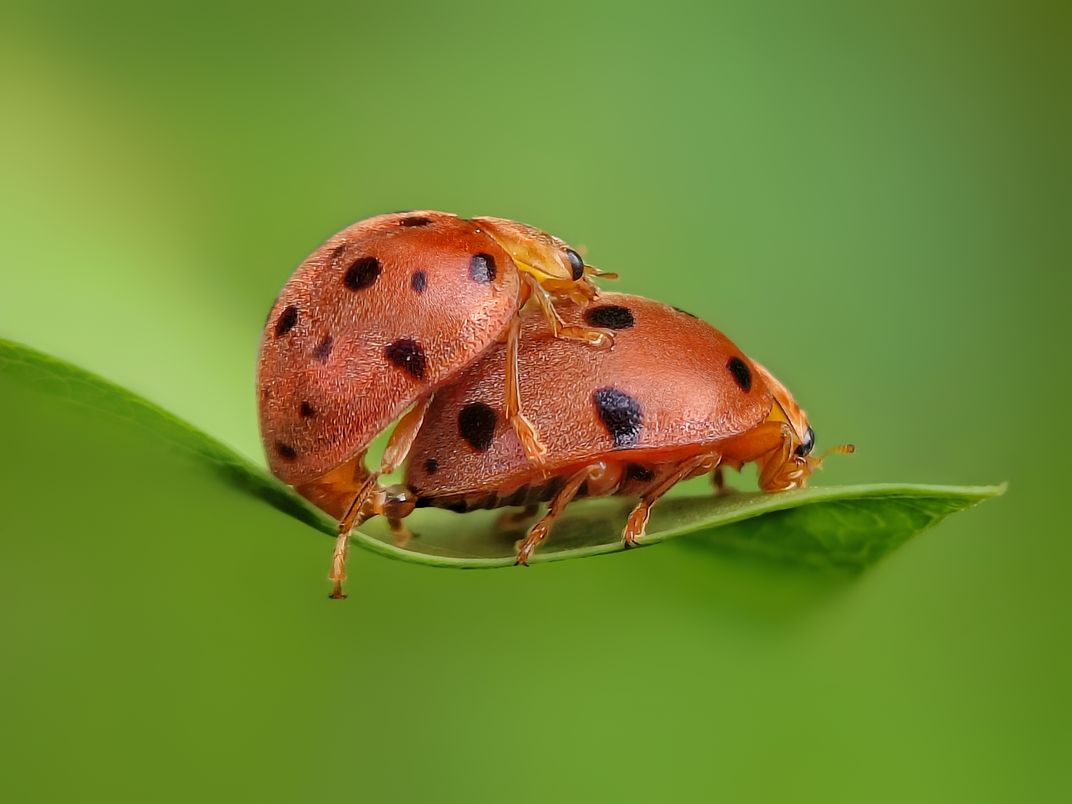
Wildlife reveals an endless tapestry of diversity, where every encounter uncovers new layers of beauty and wonder. As I wandered through meadows adorned with vibrant blossoms, my eyes fell upon a pair of Epilachna borealis, more commonly known as squash lady beetles, engaged in an intimate display of courtship. These phytophagous beetles, members of the family Coccinellidae, are strongly associated with cucurbit host plants, where both larvae and adults feed on foliage. Courtship in this species is driven primarily by chemical communication. Females release species-specific pheromones into the surrounding air, which males detect with remarkable precision using their antennae. Research indicates that male sensitivity to such cues is modulated by circadian rhythms, ensuring reproductive activity coincides with optimal environmental conditions.Once contact is established, the courtship sequence progresses into tactile communication. The male mounts the female dorsally, engaging in antennation and leg stroking behaviours. These interactions are thought to play a role in both mate recognition and stimulation, enhancing the probability of successful copulation. Such behavioural repertoires demonstrate the integration of chemical, temporal and tactile cues in insect reproduction, reflecting evolutionary strategies that maximize reproductive success.
| Date Taken: | 07.2024 |
| Date Uploaded: | 12.2025 |
| Photo Location: | Balasore, Odisha, India, India |
| Copyright: | © Sritam Kumar Sethy |